Outdoor electrical systems face rain, dust, condensation, and sudden temperature changes. A connector that works indoors may fail beside a coastal walkway or irrigation pump. Waterproof Connectors help protect electrical joints from moisture and contamination. Their sealed housings reduce corrosion risks and support stable signal or power transmission. Field technicians often notice the difference during routine inspections. Dry contacts. Intact seals. Clean threads. Yet “waterproof” is not a complete performance description. Engineers should check IP ratings, material quality, cable diameter range, and temperature limits before selection.
In outdoor lighting, cameras, renewable-energy equipment, and control cabinets, small connection failures can stop an entire system. A properly selected connector creates a dependable barrier at the cable entry point. Look for UV-resistant polymers, plated contacts, locking mechanisms, and compression seals. IP67 or IP68 protection may suit exposed locations, depending on immersion conditions. These ratings do not remove the need for correct installation. A pinched gasket can defeat an excellent design. So can an overtightened gland. Manufacturers should provide test information, wiring guidance, and traceable product data. Independent verification adds confidence when safety and uptime matter. In practice, connectors still require inspection after storms, maintenance work, or repeated movement. I have seen installations fail because the connector was suitable, but the cable jacket was not. That detail is easy to miss. Choosing well means matching the connector to the environment, electrical load, and maintenance plan. It is a practical decision, not a marketing shortcut. This article examines these factors and the trade-offs behind reliable outdoor connections.
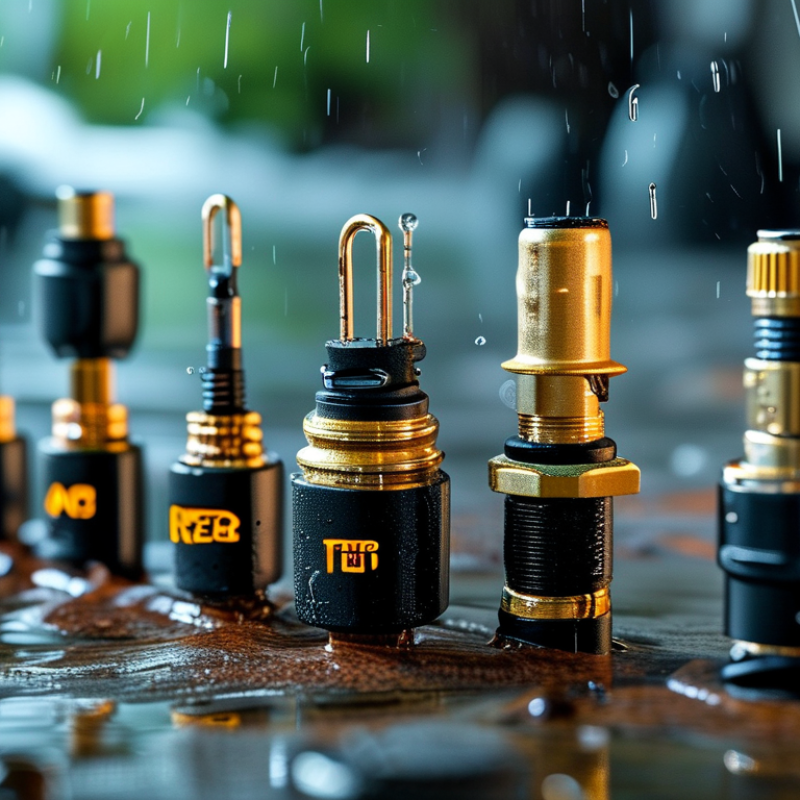
Waterproof connectors use seals, gaskets, and locking structures to limit water and dust entry. Their protection is described by the IEC 60529 IP code. The first digit measures solid-particle protection from 0 to 6. The second measures water resistance from 0 to 9. An IP67 connector is dust-tight and survives temporary immersion, usually up to one metre under defined test conditions. It is not automatically suitable for permanent underwater use.
The details matter.
An IP65 connector resists water jets, while IP66 withstands stronger jets. IP68 indicates continuous immersion, but the permitted depth and duration must come from the manufacturer’s test conditions. IP ratings do not measure ultraviolet exposure, salt spray, vibration, or repeated bending. Outdoor connectors face all of these stresses. A cable may pass an IP test, then fail after grit damages its seal.
According to the 2024 MarketsandMarkets Connector Market report, the global connector market was estimated at about 84.1 billion dollars in 2024 and may reach 114.6 billion dollars by 2029. This growth reflects wider use in industrial equipment, energy systems, and outdoor electronics. A 2024 Grand View Research report also identifies harsh-environment connectivity as a growing application area.
These figures support careful selection, not blind confidence. In practice, inspect the mating seal, verify the IP test conditions, and allow drainage around the connector. IP protection is valuable, but it is only one part of outdoor reliability.
Outdoor connectors face more than rain. Water can enter through tiny gaps, damaged seals, or poorly supported cables. Once inside, it may cause corrosion, short circuits, or intermittent signals. Dust can collect around mating surfaces and wear sealing points during vibration. Fine particles also trap moisture. These problems often appear slowly, making early inspection easy to miss.
Salt spray creates an especially aggressive environment near coastlines and roads. Salt deposits can attract moisture and accelerate metal corrosion. UV exposure can harden seals and weaken cable jackets over time. Temperature changes make materials expand and contract, stressing the connection. A high protection rating helps, but it is not a permanent guarantee. It is tempting to trust the rating alone. That assumption can fail in real installations.
Tips: Select connectors with suitable sealing, corrosion-resistant contacts, and secure strain relief. Keep cable entries pointed downward when possible. Inspect seals for cracks, discoloration, and compression damage. Clean salt or dust with approved methods, not sharp tools. Allow drainage around the connector. Small installation errors can matter more than expected. Track inspection dates, because outdoor damage often grows quietly.
| Outdoor Exposure | Typical Environmental Condition | Potential Effect on Connections | Recommended Connector Features | Relevant Rating or Test Reference |
|---|---|---|---|---|
| Rain and Splashing Water | Direct rain, puddle splash, condensation, and water spray | Short circuits, insulation degradation, corrosion, and intermittent signals | Sealed housing, compression gaskets, cable seals, positive locking, and strain relief | IEC 60529: IPX4 protects against water splashing; IPX5 protects against water jets |
| Temporary Immersion | Flooding, water runoff, or accidental submersion | Water penetration into contact areas, dielectric failure, and loss of continuity | Fully sealed mating interface, waterproof cable entry, and correct installation orientation | IEC 60529: IPX7 covers temporary immersion up to 1 m for 30 minutes; IPX8 conditions are specified by the manufacturer |
| Dust and Fine Particles | Road dust, sand, soil, and airborne particulates | Blocked mating surfaces, abrasive wear, contaminated contacts, and reduced sealing performance | Dust-tight enclosure, protected contact cavities, robust latch design, and sealed backshells | IEC 60529: IP5X limits dust ingress; IP6X is dust-tight |
| Salt Spray and Marine Air | Coastal atmosphere, salt mist, seawater splash, and de-icing salt | Galvanic corrosion, contact resistance increase, fastener corrosion, and sealing damage | Corrosion-resistant contacts, compatible metals, sealed interfaces, drainage paths, and suitable plating | ISO 9227 uses neutral salt spray testing with a 5% sodium chloride solution; test duration does not directly equal field service life |
| Ultraviolet Exposure | Direct sunlight and reflected solar radiation | Plastic embrittlement, discoloration, cracking, and loss of gasket elasticity | UV-stabilized housing and seals, weather-resistant cable jackets, and shaded installation where practical | ASTM G154 and ISO 4892-3 are commonly used for accelerated UV and weathering evaluation |
| Temperature Cycling | Day/night temperature changes, seasonal variation, and solar heating | Seal contraction and expansion, pump-in moisture, material fatigue, and contact movement | Elastic seals, controlled tolerances, secure contacts, and materials with compatible thermal expansion | IEC 60068-2-14 is used for temperature-change testing; actual limits depend on connector construction |
| Mud, Oil, and Chemical Contamination | Mud, lubricants, fuels, cleaning fluids, and agricultural chemicals | Swollen seals, softened plastics, surface contamination, and reduced insulation resistance | Chemically compatible polymers, resistant elastomers, sealed cable entries, and easy-to-clean surfaces | Chemical resistance must be verified against the specific fluid, concentration, temperature, and exposure time |
| Vibration and Mechanical Shock | Vehicles, machinery, wind-driven equipment, and moving outdoor structures | Mating loosening, fretting corrosion, conductor fatigue, and intermittent electrical faults | Positive locking, secondary retention, strain relief, vibration-resistant contacts, and proper cable support | IEC 60068-2-6 covers vibration testing; IEC 60068-2-27 covers shock testing |
Why Choose Waterproof Connectors for Outdoor Applications?
Outdoor equipment faces rain, splash, mud, condensation, and sudden temperature changes. A sealed connector helps protect electrical contacts from corrosion and unexpected signal loss. In field installations, technicians often inspect connectors after storms, not just during dry testing. Small gaps around a cable seal can become serious failure points.
IP67 and IP68 ratings provide different levels of certified protection against water ingress. Under IEC 60529, the first digit, 6, indicates dust-tight protection. The second digit, 7, covers temporary immersion, commonly up to one meter for 30 minutes. IP68 covers continuous immersion under conditions defined by the manufacturer. Greater depth or longer exposure is not automatically guaranteed. Read the test conditions carefully.
IP67 may suit outdoor lighting, control boxes, and equipment exposed to rain or brief flooding. IP68 is more suitable for submerged sensors, underground junctions, or equipment near reservoirs. However, certification usually applies to a complete mated assembly. A damaged seal, loose coupling, or incorrectly sized cable can reduce protection. That detail is easy to overlook. Water can also enter through connected equipment, even when the connector passes its test. In practical maintenance, I would check sealing surfaces, tightening torque, and cable movement after installation. Ratings are useful evidence, but they are not permission to ignore installation quality.
Why Choose Waterproof Connectors for Outdoor Applications?
Outdoor connectors face rain, salt spray, mud, cleaning water, and temperature swings. A sealed housing alone does not guarantee reliable protection. NEMA 4X matters because it addresses windblown dust, rain, hose-directed water, and corrosion resistance. The “X” is important. It signals stronger corrosion protection than ordinary NEMA 4 construction, although the enclosure still needs suitable materials and maintenance. In coastal installations, tiny scratches can become rust paths around poorly protected fittings. That detail is easy to miss.
IEC 60529 defines the IP code for protection against solids and water. An IP66 connector is dust-tight and resists powerful water jets. An IP67 connector can withstand temporary immersion under defined test conditions. Ratings describe specific tests, not every outdoor environment. IP is not a corrosion rating. An IP67 connector may survive immersion but deteriorate under repeated salt exposure. This distinction often changes the material and sealing choices.
Reliable design also depends on installation. Cable diameter, gasket compression, connector torque, drainage, and strain relief must match the application. A damaged seal can defeat an excellent rating. Check connectors after seasonal exposure, especially near roads, farms, and shorelines. I have occasionally underestimated condensation inside equipment, even when the exterior looked dry. That mistake encourages a better practice: inspect internal moisture paths, not only visible enclosure surfaces. Select NEMA 4X for corrosion-resistant enclosure performance, then use the IEC 60529 IP level that matches the actual water and dust threat.
Waterproof connectors protect outdoor circuits from rain, dust, condensation, and accidental immersion. Their value depends on correct selection, not marketing language. The IEC 60529 standard defines IPX7 as immersion up to one metre for 30 minutes. IPX8 requires conditions specified by the manufacturer. Choose the rating after studying the real environment. A rooftop sensor faces ultraviolet light, wind-driven rain, and temperature swings. A buried junction faces soil moisture and pressure.
Testing should begin before installation. Check the sealing gasket for cuts, flattening, or dirt. Confirm cable diameter and tightening torque against the technical specification. A loose gland can admit water slowly. A damaged seal can fail immediately.
Laboratory checks may include immersion, dust exposure, thermal cycling, and salt-spray testing under IEC 60068 methods. The 2024 Global E-waste Monitor reports that 62 million tonnes of electronic waste were generated in 2022. Reliable sealing helps prevent premature equipment replacement, although it cannot fix poor system design.
Maintenance needs a schedule. Inspect exposed connectors after severe storms, construction work, or unusual temperature changes. Remove grit with a clean, dry brush. Do not force a corroded coupling. Replace hardened seals and damaged housings.
NEMA enclosure guidance also warns that protection depends on installation and maintenance, not enclosure labels alone. Field teams sometimes trust an IP rating too much. That is a mistake.
Record inspection dates, test results, and torque values. Small records reveal repeated failures. They also expose assumptions that deserve another look.
| Cookie | Duration | Description |
|---|---|---|
| cookielawinfo-checkbox-analytics | 11 months | This cookie is set by GDPR Cookie Consent plugin. The cookie is used to store the user consent for the cookies in the category "Analytics". |
| cookielawinfo-checkbox-functional | 11 months | The cookie is set by GDPR cookie consent to record the user consent for the cookies in the category "Functional". |
| cookielawinfo-checkbox-necessary | 11 months | This cookie is set by GDPR Cookie Consent plugin. The cookies is used to store the user consent for the cookies in the category "Necessary". |
| cookielawinfo-checkbox-others | 11 months | This cookie is set by GDPR Cookie Consent plugin. The cookie is used to store the user consent for the cookies in the category "Other. |
| cookielawinfo-checkbox-performance | 11 months | This cookie is set by GDPR Cookie Consent plugin. The cookie is used to store the user consent for the cookies in the category "Performance". |
| viewed_cookie_policy | 11 months | The cookie is set by the GDPR Cookie Consent plugin and is used to store whether or not user has consented to the use of cookies. It does not store any personal data. |