Top 10 Rapid Sheet Metal Prototyping Types for Buyers
Choosing a sheet metal prototype process can shape your product’s cost, strength, appearance, and launch schedule. This guide examines the top 10 rapid sheet metal prototyping types for buyers who need practical comparisons, not vague promises.
The options include laser cutting, CNC bending, punching, stamping, hydroforming, deep drawing, spinning, welding, and hybrid fabrication. Each method suits different geometries and production goals. A laser-cut enclosure may be ready within days, while a deep-drawn cup requires careful tooling analysis. A bent stainless-steel bracket can expose springback issues before assembly. Small details matter.
They matter greatly.
Experienced buyers usually compare material grade, thickness, tolerance, surface finish, quantity, and inspection requirements together. A low unit price may hide setup charges, secondary deburring, or difficult dimensional control. Rapid sheet metal prototyping also demands clear drawings and realistic expectations. Not every supplier interprets “tight tolerance” in the same way.
That is worth questioning.
This overview focuses on process capability, typical applications, limitations, and supplier communication. It also considers how prototypes behave beyond the screen, including sharp edges, warped panels, weld distortion, and fit problems during assembly. No single method wins every project. A process that performs well for a five-piece electronics housing may fail for a stressed automotive bracket. Buyers should request samples, confirm inspection methods, and review manufacturability before approving production. These steps cannot remove every risk, but they can make decisions more reliable and easier to defend.
Key Criteria for Evaluating Rapid Sheet Metal Prototyping Methods
Choosing among rapid sheet metal prototyping types requires more than comparing hourly prices. Evaluate dimensional accuracy, material compatibility, and repeatability first. Laser cutting suits clean profiles and fast design changes. CNC punching can support repeated holes efficiently. Press brake forming is useful when bend angles and springback matter. Welding adds flexibility, but heat distortion can affect fit. These differences become obvious when a prototype reaches assembly.
Tips: Request a sample part and inspection report. Check tolerances at holes, bends, and edges. Ask how operators manage burrs, warping, and surface marks. Confirm whether the quoted schedule includes programming, tooling, finishing, and inspection.
Review lead time honestly. A short promise may hide limited capacity or rushed quality checks. Ask for the actual production route, not only the process name. Material traceability also matters, especially for aluminum, stainless steel, or thin gauges. Experienced suppliers should explain likely failure points before production starts. That conversation reveals practical knowledge.
Consider total cost, not the first quotation. A cheaper part may need extra deburring, rework, or assembly adjustment. For low volumes, flexible tooling often reduces risk. For repeated designs, dedicated tooling may improve consistency. Prototype quantity changes the best choice. So does geometry. I have found that simple flat parts are easy to compare, while formed enclosures expose weaknesses quickly. Some decisions remain uncertain until the first physical inspection. Record those lessons before approving the next batch.
The Ten Main Types of Rapid Sheet Metal Prototyping
Rapid Sheet Metal Prototyping: The Ten Main Types
Rapid sheet metal prototyping supports quick design checks, functional testing, and production planning. Industry reports show why speed matters. MarketsandMarkets projects the rapid prototyping market to grow from about USD 3.9 billion in 2023 to USD 11.6 billion by 2028. However, faster output does not guarantee better parts.
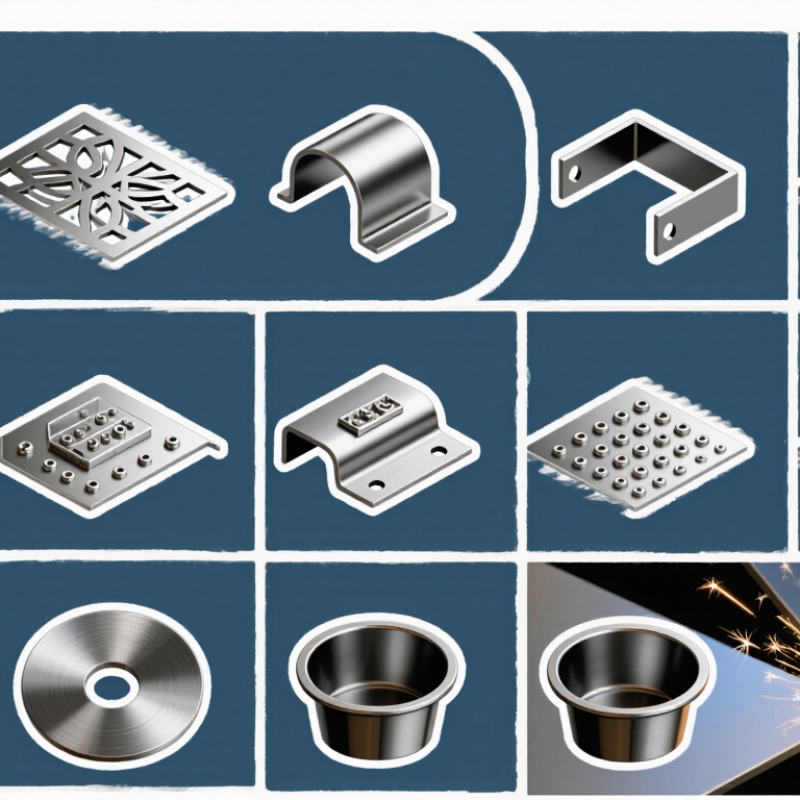
The ten main types are laser cutting, waterjet cutting, CNC punching, press brake bending, stamping, deep drawing, hydroforming, roll forming, metal spinning, and welded assembly. Laser cutting suits precise flat patterns with narrow heat effects. Waterjet cutting handles heat-sensitive alloys, but it produces more waste. CNC punching is efficient for repeated holes and louvers. Press brake bending creates accurate angles, although springback still demands correction. Stamping works well for repeatable shapes. Deep drawing forms cups and enclosures, while hydroforming supports smooth, complex geometries. Roll forming fits long profiles. Metal spinning produces round shells. Welded assembly joins several cut and bent pieces into a usable prototype.
The 2024 Grand View Research analysis of metal fabrication services identifies automation and customization as major market drivers. These trends favor digital cutting, programmed bending, and traceable inspection. Yet prototype buyers should inspect more than delivery speed. Check bend marks, edge burrs, weld distortion, surface finish, and dimensional reports. Small errors become visible during assembly.
No method is universally best. That remains easy to forget. A low-cost laser-cut sample may validate a layout, but it cannot represent deep-drawn material behavior. The strongest choice matches geometry, alloy, tolerance, volume, and testing purpose.
A Step-by-Step Guide to Selecting the Right Prototyping Type
Selecting a sheet metal prototype starts with the part’s function, not the machine.
Record material, thickness, bend radius, tolerances, finish, quantity, and delivery date. Then compare ten common options: laser cutting, waterjet cutting, CNC punching, press braking, roll forming, stamping, deep drawing, spinning, tube bending, and hybrid fabrication. Each process creates different edges, marks, and dimensional risks. A smooth sample can still hide a weak bend.
For flat parts, laser cutting suits thin sheets and complex outlines.
Waterjet cutting reduces heat distortion. CNC punching handles repeated holes efficiently. Press braking fits low-volume bent parts with clear flange dimensions. Roll forming works better for long, consistent profiles.
Tube bending depends on the centerline radius and wall thickness. Deep drawing suits cup-shaped parts, while spinning fits round components. Do not choose by shape alone. Check material behavior and required production volume.
Review cost, tooling, lead time, and inspection needs before approving the process.
Stamping may become economical at higher volumes, but its tooling investment can punish an uncertain design. Hybrid fabrication can combine cutting, bending, welding, and machining for difficult prototypes. Request process samples, bend tests, dimensional reports, and material certificates. Experienced buyers compare real parts, not only quoted tolerances.
A prototype may pass visual inspection yet fail assembly because springback was underestimated. A small pilot batch is often wiser. It costs more upfront.
Document rejected features too; they may reveal the better process.