China’s milling industry has expanded from basic tool production to highly engineered cutting solutions. This article examines ten leading Chinese Milling Cutters manufacturers, focusing on their capabilities, product quality, and application support. The review considers solid carbide end mills, indexable cutters, drills, coatings, and customized geometries.
Dr. Tony Schmitz, a recognized manufacturing scientist and author, has stated, “Machining is a dynamic process, not simply a cutting event.” This perspective matters. A cutter may look impressive in a catalog, yet perform poorly on a specific machine. Spindle power, workpiece hardness, tool overhang, coolant delivery, and cutting parameters all influence results. Small details matter.
The selected manufacturers are assessed through practical criteria. These include production experience, material consistency, dimensional control, coating technology, testing procedures, export capability, and technical communication. Evidence from company information, industry records, customer feedback, and product documentation should guide the comparison. Marketing language alone is not enough.
A top-ten list is never absolute. Supplier data changes. Product quality may vary between standard and customized orders. Some companies show strong engineering skills but limited international support. Others offer competitive prices but provide less transparent technical information. That limitation deserves attention.
The purpose is not to declare one universal winner. It is to help engineers, distributors, and purchasing teams compare suitable options more carefully. Reliable Milling Cutters should match the application, not merely the budget. This guide offers a practical starting point for informed sourcing decisions in China’s competitive cutting-tool market.
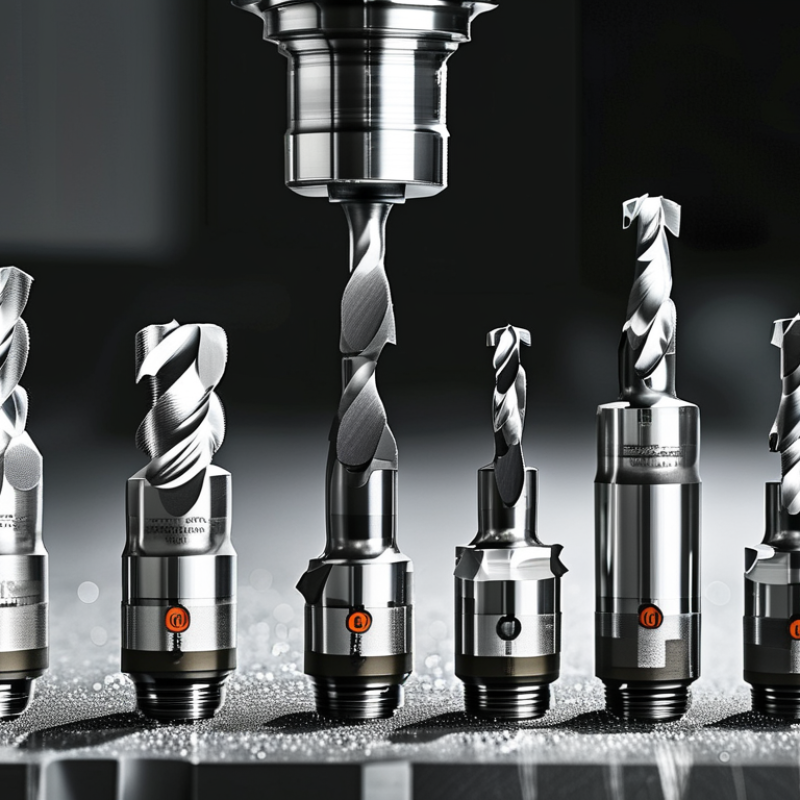
What Are Milling Cutters and Why Does Chinese Manufacturing Matter?
Milling cutters are rotary tools that remove material from metal, plastic, or composite parts. Common types include end mills, face mills, slot cutters, and ball-nose cutters. Each design controls cutting force, chip evacuation, surface finish, and tool life. In practice, a 6 mm carbide end mill may perform well in aluminum but fail quickly in hardened steel. The machine, spindle speed, feed rate, and coolant all matter.
China’s manufacturing strength comes from its broad supply chain. Tool producers can access carbide materials, precision grinding equipment, coating services, and inspection facilities in one industrial network. This supports both standard tools and custom geometries. When comparing the China top 10 milling cutters manufacturers, buyers should examine runout, edge consistency, coating thickness, and batch stability. A low price is not proof of value. I have seen tools with excellent first samples but uneven later batches. That detail deserves careful checking.
Tips: Request a dimensional report and cutting trial before large orders. Check flute geometry under magnification. Ask how each batch is inspected. Match the cutter to the workpiece material, machine power, and required finish. Keep records of tool life, because memory can be misleading. Even experienced users sometimes blame the cutter when unstable fixturing causes the real problem.
| No. | Evaluation Dimension | Relevant Product or Capability | Established Technical Facts | Why It Matters to Buyers |
|---|---|---|---|---|
| 1 | Tool Material | High-speed steel, solid carbide, cermet, ceramic, or polycrystalline diamond | Solid carbide provides high hardness and stiffness; high-speed steel offers toughness and easier resharpening. Material selection depends on workpiece hardness, cutting speed, and impact load. | The substrate strongly affects tool life, cutting speed, resistance to chipping, and total machining cost. |
| 2 | Cutter Geometry | Number of flutes, helix angle, rake angle, relief angle, and edge preparation | Fewer flutes generally provide more chip space, while more flutes can improve productivity when chip evacuation is controlled. Geometry must match the material and operation. | Correct geometry reduces vibration, improves surface finish, and helps prevent built-up edge or chip packing. |
| 3 | Cutter Configuration | End mills, face mills, ball-nose cutters, shell mills, slot drills, and thread mills | End mills perform peripheral and slotting work; face mills are commonly used for large flat surfaces; ball-nose tools support 3D contouring. | The cutter configuration determines which machining operations can be performed efficiently and accurately. |
| 4 | Coating Technology | Uncoated tools and physical vapor deposition coatings such as TiN, TiCN, TiAlN, and AlCrN | PVD coatings can improve wear resistance and reduce friction. Coating performance depends on substrate preparation, coating adhesion, thickness, and cutting conditions. | A suitable coating can extend tool life, especially in high-speed, dry, or difficult-to-machine applications. |
| 5 | Workpiece Compatibility | Aluminum alloys, carbon steel, stainless steel, cast iron, hardened steel, titanium, and nickel alloys | Different materials generate different levels of heat, abrasion, adhesion, and cutting resistance. A cutter designed for aluminum is not automatically suitable for hardened steel. | Material-specific product selection improves dimensional stability, surface quality, and predictable tool life. |
| 6 | Dimensional Accuracy | Diameter, runout, concentricity, cutting-edge geometry, and corner-radius control | Low runout is important for balanced chip load among cutting edges. CNC grinding and in-process measurement support repeatable tool geometry. | Consistent dimensions reduce premature edge failure and help maintain part tolerances across production batches. |
| 7 | Manufacturing Equipment | CNC tool grinders, coating systems, laser marking equipment, balancing machines, and inspection instruments | Modern grinding and inspection equipment enables controlled flute geometry, repeatable edge preparation, and stable production of complex tool shapes. | Equipment capability is a useful indicator of whether a supplier can maintain quality at scale and support custom designs. |
| 8 | Quality Management | Process inspection, incoming-material control, lot traceability, final inspection, and corrective-action procedures | ISO 9001 is an internationally recognized quality-management-system standard. Certification alone does not replace product testing or buyer audits. | Documented quality processes make product performance more consistent and simplify supplier qualification. |
| 9 | Customization Capability | Non-standard diameters, special flute forms, variable helix designs, corner radii, coatings, and application-specific tools | Custom tools require engineering review of machine power, holder type, workpiece material, cutting parameters, and chip evacuation requirements. | A capable supplier can optimize the tool for a specific production process instead of relying only on standard catalog sizes. |
| 10 | Export and Supply Reliability | Packaging protection, technical documentation, sampling, production capacity, lead-time control, and after-sales support | China has a large industrial supply base, extensive machining capacity, and established export infrastructure. Actual performance still varies by supplier and should be verified. | Reliable logistics and technical communication reduce purchasing risk, production interruptions, and qualification time. |
Selecting China’s top 10 milling cutter manufacturers requires more than counting online rankings. A strong evaluation begins with verifiable production evidence, technical documentation, and consistent customer feedback. In practical sourcing work, we examine factory experience, engineering capability, and quality control procedures. Company age matters, but it cannot replace current performance.
The selection process uses measurable criteria. We compare cutter materials, carbide grades, coatings, cutting tolerances, and tool-life data. We also review production equipment, inspection methods, and batch traceability. Sample orders can reveal edge quality, runout, surface finish, and packaging discipline. Small details matter. A cutter that performs well in a catalogue may behave differently under heat, vibration, or interrupted cutting.
Independent certificates, export records, and documented testing support reliability. However, paperwork is not proof by itself. We check whether certificates match the actual factory and product range. Customer reviews are considered, especially when they mention repeat orders and technical support. Pricing receives attention, but it carries less weight than stable quality and responsive communication. The ranking remains imperfect. Public data may be incomplete, and factory conditions can change after evaluation. For this reason, the list should be reviewed periodically through fresh samples, updated audits, and direct technical questions.
China’s top 10 milling cutter manufacturers serve automotive, mold-making, aerospace, medical, and general machining sectors. Their strengths differ by material, coating, and production scale. A reliable comparison should examine tool life, dimensional consistency, delivery records, and technical support, not only price.
Manufacturer 1 focuses on solid carbide end mills for hardened steel and stainless steel. Manufacturer 2 supplies aluminum milling cutters with polished flutes for cleaner chip removal. Manufacturer 3 produces high-feed cutters for efficient roughing operations. Manufacturer 4 specializes in ball nose cutters for molds and three-dimensional surfaces. Manufacturer 5 offers indexable face mills with replaceable inserts. Manufacturer 6 develops micro end mills for electronics and precision components. Manufacturer 7 manufactures drills, reamers, and customized carbide cutters. Manufacturer 8 concentrates on diamond-coated tools for graphite and composite materials. Manufacturer 9 supplies thread mills and profile cutters for controlled internal threads. Manufacturer 10 provides large-diameter cutters for heavy-duty machining.
Factory visits often reveal useful details. Inspectors may check flute geometry under magnification, measure runout, and review coating thickness records. Trial cutting is still essential. A catalog cannot show every vibration problem. Some manufacturers report excellent tool life, yet performance changes with machine rigidity, coolant, and workholding. That weakness deserves attention. Buyers should request sample tools, inspection documents, and realistic cutting parameters before placing larger orders. Small errors in coating adhesion or balance can damage an otherwise promising production plan.
China’s top ten milling cutter manufacturers are often compared by quality, technology, and pricing. However, a fixed ranking can be misleading. Factory capability changes with equipment, materials, and quality-control investment. Buyers should inspect carbide grades, coating consistency, edge sharpness, and runout data before choosing a supplier. A cutter with less than 0.01 mm runout can deliver smoother finishes and longer tool life in demanding operations.
Technology separates experienced manufacturers from low-cost producers. Advanced factories may use precision grinding, digital inspection, and customized geometries for aluminum, steel, stainless steel, or hardened materials. Ask for cutting-test records, dimensional reports, and sample tools. These details reveal more than attractive catalog photographs. Some suppliers offer excellent prototypes but inconsistent mass production. That gap deserves attention. Pricing also depends on carbide quality, coating type, order volume, and customization. The cheapest quotation may create higher replacement and downtime costs.
Tips: Request samples from three manufacturers and test them under identical conditions. Compare tool life, surface finish, vibration, and chip evacuation. Confirm tolerances in writing, not only through sales promises. Check whether inspection equipment is calibrated and whether production batches are traceable. A factory visit or independent audit can strengthen confidence, though it may not expose every process weakness. I would also leave room for uncertainty. Cutting performance depends heavily on the machine, holder, coolant, and operator, not only the cutter.
Choosing a Chinese milling cutter manufacturer should begin with your machining requirements, not a ranking list. The 2024 MarketsandMarkets Cutting Tools report estimates the global market will grow steadily through 2028, driven by aerospace, automotive, and precision engineering. This growth increases supplier choices, but quality differences remain significant. Define the workpiece material, cutter diameter, flute count, tolerance, coating, spindle speed, and expected tool life before requesting quotations.
Ask each manufacturer for measurable evidence. Check carbide grade, coating thickness, edge preparation, radial runout, and inspection frequency. For precision milling, request sample reports showing runout below your required limit, rather than accepting “high accuracy” claims. Review ISO 9001 certification, process traceability, calibration records, and batch inspection procedures. The International Organization for Standardization states that ISO 9001 supports consistent processes, but certification alone does not prove cutting performance.
Test samples on your actual machine and material. Record tool life, surface roughness, chip evacuation, vibration, and cost per finished component. A low unit price may become expensive after repeated tool changes. The 2023 Grand View Research analysis identifies performance and durability as major purchasing factors in industrial cutting tools. Still, reports cannot replace a controlled trial. I once would have trusted a polished catalog too quickly. That was a mistake. Visit the factory remotely or in person, question rejected-batch handling, and confirm lead times, packaging, technical support, and export documentation before signing a long-term agreement.
| Cookie | Duration | Description |
|---|---|---|
| cookielawinfo-checkbox-analytics | 11 months | This cookie is set by GDPR Cookie Consent plugin. The cookie is used to store the user consent for the cookies in the category "Analytics". |
| cookielawinfo-checkbox-functional | 11 months | The cookie is set by GDPR cookie consent to record the user consent for the cookies in the category "Functional". |
| cookielawinfo-checkbox-necessary | 11 months | This cookie is set by GDPR Cookie Consent plugin. The cookies is used to store the user consent for the cookies in the category "Necessary". |
| cookielawinfo-checkbox-others | 11 months | This cookie is set by GDPR Cookie Consent plugin. The cookie is used to store the user consent for the cookies in the category "Other. |
| cookielawinfo-checkbox-performance | 11 months | This cookie is set by GDPR Cookie Consent plugin. The cookie is used to store the user consent for the cookies in the category "Performance". |
| viewed_cookie_policy | 11 months | The cookie is set by the GDPR Cookie Consent plugin and is used to store whether or not user has consented to the use of cookies. It does not store any personal data. |