Get an instant quote
Get in touch Listen to our podcast

Blog

Top 10 Suture Anchor Orthopedics Manufacturers Worldwide

The global Suture Anchor Orthopedics market is shaped by surgical precision, material science, and dependable clinical performance. This article examines ten leading manufacturers worldwide, focusing on their technologies, product breadth, and contribution to modern soft-tissue repair.

Dr. Peter J. Millett, an orthopedic shoulder surgeon and sports-medicine researcher, has stated, “The goal of rotator cuff repair is to restore the anatomy and function of the shoulder.” That principle remains central to suture-anchor design. A small implant can influence tendon contact, knot security, pullout resistance, and rehabilitation planning. Surgeons often evaluate anchor diameter, insertion method, suture strength, and compatibility with bone quality. They also consider operating-room efficiency. A smooth deployment matters when every movement occurs through a narrow portal.

Clinical needs differ.

Some procedures require all-suture anchors. Others favor PEEK or bioabsorbable materials. No single design fits every patient, tendon, or surgical technique. That limitation deserves attention. Manufacturer claims may sound impressive, yet meaningful comparison requires peer-reviewed evidence, transparent testing, and long-term follow-up. Regulatory clearance alone does not prove universal clinical superiority.

This ranking therefore considers more than market visibility. It reviews manufacturing experience, orthopedic specialization, research activity, surgeon usability, and quality-system reliability. Product availability and regional approval can also change. Readers should verify current specifications before making clinical or purchasing decisions. The leading names may offer advanced platforms, but responsible selection still depends on anatomy, surgeon judgment, and patient-specific risks.
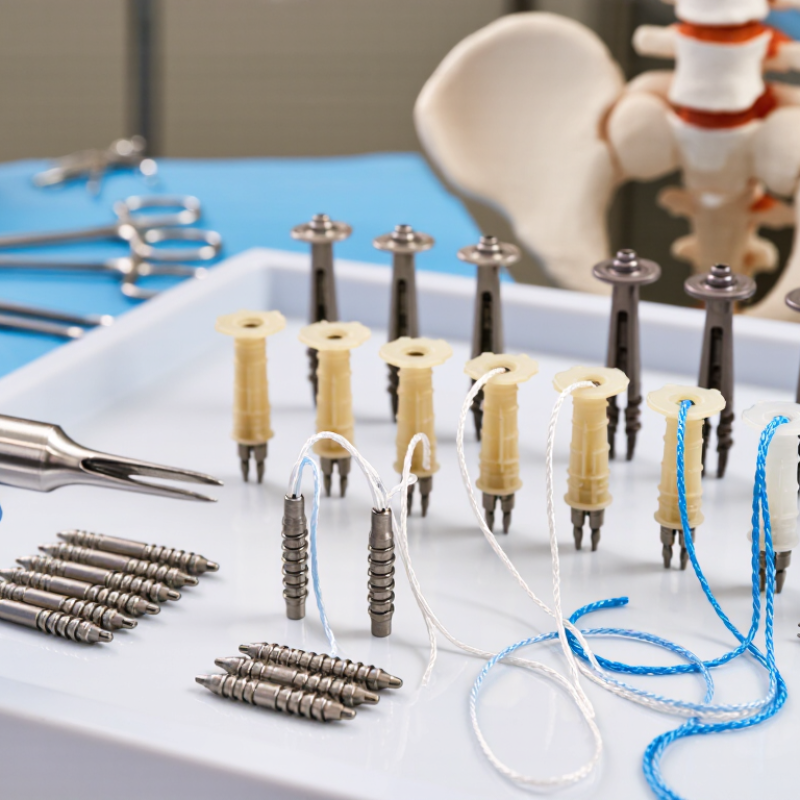
Top 10 Suture Anchor Orthopedics Manufacturers Worldwide

Definition and Role of Suture Anchors in Orthopedic Surgery

Suture anchors are small fixation devices used to attach soft tissue to bone. Surgeons place them during rotator cuff, labral, hip, knee, and foot procedures. The anchor sits inside a prepared bone tunnel or socket. Sutures then secure the tendon or ligament against the healing surface.

Their role is mechanical and biological. They restore tension, limit tissue displacement, and support healing during early rehabilitation. Common materials include metal, bioabsorbable polymers, and radiolucent composites. Design choices involve anchor size, insertion angle, pullout strength, and the quality of the patient’s bone. A 2024 MarketsandMarkets report identified sports medicine as a major driver of orthopedic device demand, reflecting increased treatment for active patients and aging populations. The demand is real, but market growth does not prove that every design improves clinical outcomes.

Clinical selection requires more than a strong laboratory test. A 2023 systematic review in Arthroscopy reported that anchor-related complications remain uncommon, yet failure can involve loosening, migration, suture breakage, or poor tissue healing. In practical surgery, a few millimeters matter. Poor placement can weaken fixation or irritate nearby cartilage. Surgeons therefore assess bone density, tear pattern, loading demands, and rehabilitation compliance. Evidence also varies between procedures and materials. Some published studies use small samples or short follow-up periods. That gap deserves honest attention.

Top 10 Suture Anchor Orthopedics Manufacturers Worldwide - Definition and Role of Suture Anchors in Orthopedic Surgery

Rank Manufacturer Profile Core Anchor Materials Common Anchor Designs Typical Orthopedic Applications Suture Configuration Primary Surgical Role Key Clinical Considerations
1 Global Profile A Titanium and PEEK Threaded screw-in anchors Rotator cuff repair, labral repair, foot and ankle fixation Single or multiple high-strength sutures Secures soft tissue to bone through a mechanically stable fixation point Metal provides high initial strength; radiolucent PEEK can reduce MRI artifact
2 Global Profile B PEEK and other radiolucent polymers Threaded and knotless anchors Shoulder stabilization, biceps tenodesis, hip labral repair Braided high-strength suture tape or suture Maintains tissue reduction without requiring arthroscopic knot tying Knotless systems require correct tensioning and secure locking during insertion
3 Global Profile C PLLA and other bioabsorbable polymers Interference-style and screw-in anchors Shoulder and knee soft-tissue fixation Preloaded nonabsorbable sutures Provides temporary fixation while the repaired tissue integrates with bone Absorption profile, local inflammatory response, and bone quality must be considered
4 Global Profile D PLGA and composite bioabsorbable materials Small-diameter suture anchors Hand, wrist, elbow, and ankle ligament repair One or two high-strength sutures Fixes small tendons and ligaments through limited-access surgical portals Small anchor size helps preserve bone but may reduce pull-out resistance in weak bone
5 Global Profile E All-suture anchor components with polyester or UHMWPE suture Soft, deployable all-suture anchors Glenoid labral repair and other minimally invasive procedures High-strength braided suture sleeve Creates fixation with a small drill hole and limited implant volume Deployment technique, cortical bone quality, and hole preparation affect fixation strength
6 Global Profile F Titanium alloy and stainless steel Solid screw-in anchors High-load tendon and ligament fixation High-strength braided suture or tape Delivers strong immediate mechanical fixation in suitable bone Potential imaging artifact and permanent implant retention should be assessed
7 Global Profile G PEEK, titanium, and hybrid constructs Double-loaded and multi-point anchors Rotator cuff footprint restoration and broad soft-tissue repairs Multiple sutures or wide suture tape Distributes load across a larger tissue-to-bone contact area Footprint coverage, anchor spacing, and avoidance of convergence are important
8 Global Profile H Bioabsorbable polymers with calcium-phosphate composites Biocomposite threaded anchors Shoulder, hip, knee, and sports-medicine repairs Nonabsorbable high-strength suture Combines temporary mechanical fixation with a resorbable implant strategy Material degradation, radiographic appearance, and local bone response vary by composition
9 Global Profile I PEEK and reinforced polymer blends Low-profile knotless anchors Labral repair, capsular plication, and tendon reattachment Suture tape with adjustable or self-locking mechanisms Supports controlled tissue compression with reduced implant prominence Excessive tension may strangulate tissue; deployment should follow the intended technique
10 Global Profile J Titanium, PEEK, bioabsorbable, and all-suture systems Comprehensive modular anchor portfolio Shoulder, hip, knee, foot, ankle, hand, and elbow surgery Single-loaded, double-loaded, and tape-based options Provides procedure-specific choices for tissue fixation and load distribution Selection depends on anatomy, bone density, repair pattern, imaging needs, and surgeon preference

Definition: A suture anchor is an orthopedic implant that attaches tendon, ligament, labrum, or other soft tissue to bone. It is commonly inserted through a prepared bone hole and connected to the tissue with one or more surgical sutures.


Key Technologies Used in Modern Suture Anchor Manufacturing

Top 10 Suture Anchor Orthopedics Manufacturers Worldwide

Modern suture anchor manufacturing combines material science, precision machining, and controlled assembly. Many anchors use titanium, PEEK, or bioabsorbable polymers. Each material offers different strength, imaging behavior, and tissue response. UHMWPE sutures provide high tensile performance with a small profile. Small details matter.

Computer-controlled machining creates accurate threads, eyelets, and anchor bodies. For polymer components, injection molding supports repeatable shapes and smooth surfaces. Some manufacturers also use additive manufacturing for prototypes and complex design studies. These methods help engineers test insertion torque, pullout strength, and fatigue resistance before clinical use.

Surface engineering can improve handling and bone interaction. Porous structures may support controlled bone ingrowth in selected designs. However, more porosity does not automatically mean better fixation. Manufacturing teams must balance strength, cleanliness, and biological performance. Automated vision systems inspect holes, edges, and surface defects. Traceability records link raw materials to each production batch.

Sterilization requires careful validation because heat, radiation, or chemical exposure can affect polymers and sutures. Packaging tests examine seal strength, moisture protection, and shelf stability. In practical evaluations, surgeons often notice whether the anchor loads smoothly and whether the suture passes without catching. That feedback can reveal problems laboratory measurements miss. Some design assumptions still fail in real procedures. Careful review remains necessary.

Criteria for Evaluating Global Suture Anchor Manufacturers

Top 10 Suture Anchor Orthopedics Manufacturers Worldwide

Evaluating global suture anchor manufacturers requires more than comparing catalog sizes. Start with clinical evidence, material traceability, and documented quality systems. Reliable manufacturers should explain anchor composition, suture strength, insertion torque, and pull-out testing. Their data should reflect realistic bone conditions, not only ideal laboratory samples. Look for peer-reviewed studies, transparent technical files, and consistent regulatory compliance across target markets. Manufacturing experience also matters. A company producing anchors for years may understand sterilization failures, packaging damage, and difficult insertion angles better than a new supplier.

Surgeon feedback adds practical value. Ask whether the anchor advances smoothly, seats securely, and remains visible under imaging when appropriate. Check instrument ergonomics, thread design, and compatibility with common surgical techniques. Supply continuity deserves equal attention. Delayed delivery can disrupt operating schedules, even when the product performs well. Manufacturer training, complaint handling, and post-market surveillance can reveal its real level of accountability. No scorecard is perfect. A promising study may still lack long-term follow-up.

Tips: Build a weighted evaluation sheet before contacting suppliers. Give clinical evidence and quality control more weight than marketing claims. Request batch records, sterilization validation, and sample packaging for inspection. Compare at least ten manufacturers using identical questions. Document every answer. Small inconsistencies may signal larger process weaknesses. Also, involve surgeons, procurement staff, and quality specialists in the review. Their priorities often conflict, but that tension can expose overlooked risks. Reassess the ranking when new evidence appears, rather than treating the first score as final.

Top 10 Suture Anchor Orthopedics Manufacturers Worldwide

Criteria for Evaluating Global Suture Anchor Manufacturers

This weighted benchmark highlights the main objective criteria used when evaluating global suture anchor manufacturers. The scores represent relative procurement importance on a 100-point scale, covering product quality, clinical support, regulatory readiness, manufacturing capability, and supply reliability.

Top 10 Suture Anchor Orthopedic Manufacturers Worldwide

The top 10 suture anchor orthopedic manufacturers worldwide compete through material science, fixation strength, and surgical usability. Their products support rotator cuff, labral, and ligament repairs. Worldwide demand is rising as sports injuries and aging populations increase procedure volumes. Grand View Research valued the global orthopedic devices market at approximately US$52 billion in 2023, with continued growth projected through 2030. Suture anchors represent a focused segment within this expanding market.

Experienced surgeons usually assess more than headline claims. They examine anchor pullout strength, insertion torque, suture handling, radiographic visibility, and compatibility with minimally invasive techniques. Materials may include PEEK, titanium, or bioabsorbable polymers. Each option has trade-offs. Titanium can provide strong fixation, while bioabsorbable designs may reduce long-term imaging interference. Clinical evidence still matters most. A 2023 review in the Journal of Orthopaedic Surgery and Research noted that outcomes depend on bone quality, anchor placement, tear pattern, and rehabilitation—not the device alone. That point deserves more attention.

Tips: Compare peer-reviewed clinical data, regulatory clearances, sterilization information, and surgeon training support. Check whether reported testing reflects real bone conditions. Bench results can look impressive. Patient outcomes may differ. Manufacturers with transparent adverse-event reporting and post-market surveillance offer stronger reliability. Buyers should also review inventory stability, instrument ergonomics, and regional approval requirements. No single anchor fits every repair. Even experienced teams can overlook small differences in deployment depth or suture friction.

Market Trends and Selection Considerations for Healthcare Providers

Top 10 Suture Anchor Orthopedics Manufacturers Worldwide

Market Trends and Selection Considerations for Healthcare Providers

The global suture anchor market is moving toward smaller implants, stronger fixation, and simpler delivery systems. Healthcare providers now compare more than product size and price. They examine clinical evidence, material performance, insertion control, and long-term reliability. A useful shortlist should include manufacturers with transparent quality systems, traceable production, and consistent technical documentation. Sales claims alone are not enough.

Surgeons often value predictable handling during demanding procedures. A secure anchor should advance smoothly and maintain stable fixation in suitable bone conditions. Providers should review pullout data, fatigue testing, sterilization methods, and instructions for use. Training support also matters. Clear demonstrations can reduce avoidable handling errors. Small details matter.

Procurement teams should assess supply continuity, lot tracking, complaint procedures, and response times. Independent clinical feedback can reveal issues that brochures miss. Cost remains important, but the cheapest option may create hidden workflow or revision expenses. I would not treat any top-ten list as universally correct. Patient anatomy, surgical technique, hospital protocols, and local approval requirements can change the decision. Periodic review is necessary because materials and evidence continue to evolve.

CNC machining CAD export file formats

Put your parts in production today

Get an instant quote