How to Choose the Best White DTF Ink in 2026?
Choosing the best White Dtf Ink in 2026 requires more than comparing prices or brightness claims. A reliable choice begins with your printer, film, powder, and production environment. Ink that performs beautifully on one setup may clog another machine within days. That is an uncomfortable reality.
Experienced operators usually inspect viscosity, pigment concentration, drying behavior, and nozzle stability. White ink must provide strong coverage without creating heavy, uneven layers. Watch the printhead during long runs. A clean nozzle pattern often tells more than a product brochure. Check technical data sheets, safety information, recommended shaking intervals, and storage temperatures before purchasing.
Wash resistance matters too. Print a small test image, cure it correctly, and wash it repeatedly. Examine fine text, dark cotton fabric, and stretch garments. A trustworthy supplier should provide batch information, practical troubleshooting, and responsive technical support. Independent reviews can help, but they should not replace your own testing. Marketing photographs are not laboratory evidence.
The best White Dtf Ink depends on your actual workflow. Consider daily output, white ink circulation, maintenance time, fabric types, and acceptable waste. Some formulas offer excellent opacity but require more frequent cleaning. Others flow smoothly yet appear slightly gray on black garments. There is no perfect formula. Even experienced printers can overlook humidity or curing temperature. A careful comparison therefore combines measurable testing, supplier credibility, and honest reflection after production. That approach reduces surprises and supports consistent results throughout 2026.
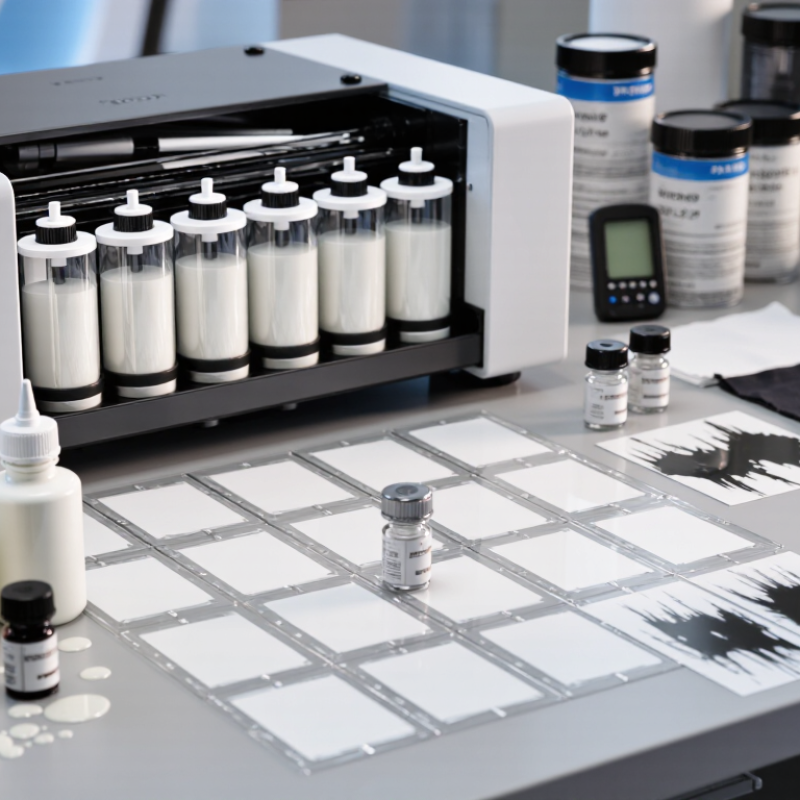
What Is White DTF Ink and Why Does Its Quality Matter?
White DTF ink is the opaque layer printed beneath colored artwork on direct-to-film transfers. It acts like a clean canvas, especially on black cotton, polyester, and blended garments. Its main ingredients usually include pigment, resin, water, and additives. Quality matters because weak opacity makes colors look dusty, while unstable ink can settle inside the circulation system.
Industry data explains why this detail deserves attention. Grand View Research projects the global direct-to-film printing market to grow at a compound annual growth rate of about 14% from 2024 to 2030. Smithers also identifies digital textile printing as a continuing growth area, driven by shorter production runs and customized apparel. More orders mean more pressure on white ink consistency. A low-quality batch may create banding, pinholes, gray edges, or poor wash durability.
In production, I check the bottle before the printer. The ink should look evenly dispersed, without heavy sediment at the bottom. I also monitor nozzle checks, white-layer density, drying behavior, and transfer adhesion. A useful test is simple: print a white block, cure it, press it onto dark fabric, then wash it repeatedly. Measure the result by sight and touch. Not perfectly scientific, but revealing. White ink is often blamed for printer problems, yet humidity, curing temperature, and storage time can also interfere. Choosing the “best” ink is therefore not only about opacity. It is about stable chemistry, reliable technical data, and performance under your actual workflow. I would still question any claim based only on a sample sheet.
How to Choose the Best White DTF Ink in 2026?
What Is White DTF Ink and Why Does Its Quality Matter?
White DTF ink is a pigment-based ink used to create an opaque white layer beneath colored artwork on DTF transfer film. The suggested evaluation weights focus on practical quality dimensions: consistent jetting reduces nozzle blockage, strong opacity improves color brightness, wash durability protects the finished transfer, and good storage stability helps prevent sedimentation. Actual results should be verified with the intended printer, film, powder, curing temperature, and washing conditions.
Which Technical Factors Define High-Quality White DTF Ink?
Choosing the best white DTF ink in 2026 requires more than checking brightness. High-quality ink should provide strong opacity, stable viscosity, and consistent particle dispersion. It must stay uniform.
In production testing, I examine the ink after sitting overnight. Heavy sediment at the bottle bottom can signal poor stability. A gentle shake should restore consistency without creating excessive foam. Particle size also matters because oversized particles may block dampers, filters, or printhead nozzles. Surface tension affects drop formation, edge sharpness, and fine text. Test it warm. Temperature changes can alter flow during long print runs.
Opacity should be checked on dark cotton, polyester, and blended fabrics. A useful test compares one white layer with two layers, then measures coverage after heat pressing. Good ink should cure evenly without a rubbery surface or visible cracking after washing. However, a very bright white is not always the most practical choice. Excess pigment can increase thickness and reduce flexibility. I once accepted stronger whiteness during a sample test, but the printed film felt heavier than expected. That mistake changed how I evaluate ink.
Look for clear storage guidance, batch traceability, and documented technical data. Reliable suppliers should explain recommended shaking, filtration, curing temperature, and humidity ranges. Small test prints reveal more than attractive product claims. Check nozzle stability, white density, film adhesion, and wash performance across several days. No single measurement proves quality. Consistent results do.
How to Evaluate Compatibility With DTF Printers and Transfer Films
Choosing the best white DTF ink in 2026 starts with printer compatibility. White ink is usually thicker than color ink, so the printhead must handle its viscosity consistently. Check the printer’s recommended viscosity range, circulation system, nozzle size, and white-ink channel design. A compatible ink should flow smoothly without frequent shaking, clogging, or sudden density changes.
Run a controlled test before buying a large quantity. Print a white-underbase pattern with fine text, solid blocks, and soft gradients. Watch the nozzle check after several hours, not only after the first print. In my testing, an ink can look excellent at the beginning but develop sediment overnight. That detail is easy to miss. Keep the ink room near a stable temperature, and record circulation time, cleaning frequency, and humidity.
Transfer film compatibility matters just as much. The white layer should sit evenly on the coated film without pinholes, spreading, or excessive powder absorption. Test both light and dark garments, then check stretch resistance after pressing and washing. Follow the film supplier’s recommended powder size, curing temperature, and pressing time. However, those settings are starting points, not guarantees. A slightly different dryer or fabric can change the result. If the print feels brittle, powder may be excessive; if edges lift, curing or adhesion may be insufficient. Evaluate samples after 24 hours and after washing, because immediate results can be misleading.
How to Select, Store, and Maintain White DTF Ink in 2026
In 2026, selecting white DTF ink starts with printer compatibility, not the lowest price. Check the ink’s recommended viscosity, curing range, and printhead requirements. A good white layer should look opaque without feeling unusually thick. Test small color patches and perform a wash test before regular production. Inspect the printed film under bright light. Gray edges often indicate weak coverage or poor curing. I have learned that supplier claims are useful, but real sample testing is more reliable.
Store white DTF ink upright in a sealed, light-resistant container. Keep it in a stable room, usually around 18–25°C, unless the technical sheet states otherwise. Never freeze it. Avoid hot windowsills and dusty worktables. Gently mix settled pigment before filling the tank. Do not shake aggressively, because foam can disturb ink delivery. Record the opening date and avoid combining different batches without testing. Small details matter.
Maintain the white channel every working day. Run a nozzle check before printing and keep the circulation system active when required. Clean the capping station, wiper, and ink lines with approved cleaning fluid. Dried residue can appear suddenly. If a nozzle check declines, pause production and investigate rather than increasing white ink blindly. I sometimes find maintenance takes longer than expected, but skipping it creates more waste. Replace dampers and filters according to measured performance, not habit.