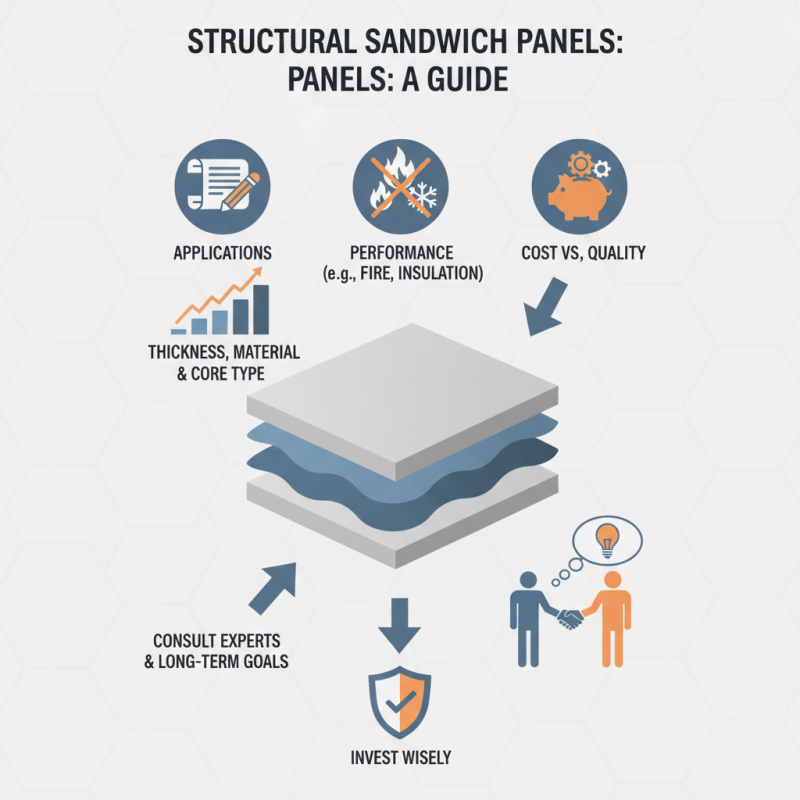
When selecting the right Structural Sandwich Panel, various factors come into play. These panels are gaining popularity due to their lightweight design and insulating properties. However, choosing the best one requires careful consideration of several elements.
Understanding your specific needs is crucial. Different applications demand different types of panels. For example, the thickness, material, and core type can significantly affect performance. Panels made from polyurethane might offer better insulation but could be less fire-resistant than others. It is essential to evaluate these aspects based on your project requirements.
It's also vital to consult with industry experts. They can guide you through the specifications and options available. While you might find budget-friendly choices, don't overlook the importance of quality. A low-cost panel might save money initially but could lead to more expenses down the line. Reflect on how each option aligns with long-term goals. This process ensures you invest wisely in Structural Sandwich Panels that truly meet your needs.
Understanding Structural Sandwich Panels and Their Applications
Structural sandwich panels consist of two outer skins and a core material. This design delivers high strength and low weight. These panels are widely used in various applications, including walls, roofs, and partitions. Their versatility makes them suitable for both commercial and industrial use. The choice of core material significantly impacts the panel's thermal insulation and structural integrity.
Tip: Consider the specific environmental conditions where the panels will be installed. Thermal performance and fire resistance may vary based on the materials used.
Another important aspect is the load-bearing capacity of the panels. Different projects require distinct strength levels. It is essential to evaluate the structural requirements of your building before making a choice. Engaging a structural engineer can help ensure the panels meet all safety standards.
Tip: Always request samples from suppliers. This helps in assessing the quality and suitability of the materials for your project. Good communication with manufacturers can also clarify any concerns.
Structural sandwich panels can sometimes exhibit issues, like thermal bridging or moisture penetration. It's crucial to be aware of these potential problems and plan accordingly. Regular maintenance can mitigate some of these risks and prolong the panels' lifespan.
When selecting structural sandwich panels, consider key factors that significantly impact performance and durability. The material composition is crucial. You want panels made from weather-resistant materials like polyurethane or polystyrene. These materials provide excellent thermal insulation and strength, which are essential for various applications.
Another important aspect is the panel thickness. Thicker panels often offer better insulation and structural integrity. However, they may also be heavier. Consider the specific requirements of your project. Sometimes, thinner panels might suffice, especially in less demanding environments. Additionally, factor in the edge details; proper sealing will enhance longevity and performance.
Cost is always a consideration. While cheaper panels might save initial costs, they often lead to larger expenses down the line due to replacements or repairs. Investing in quality can be more economical in the long run. Reflect on how the panels will be used and choose materials that align with your durability expectations and budget constraints. Each project is unique, and a one-size-fits-all solution rarely works, so careful evaluation is paramount.
| Factor | Description | Importance Level (1-5) |
|---|---|---|
| Material Type | Choose between EPS, PIR, or Rockwool cores based on thermal insulation needs. | 5 |
| Panel Thickness | Thicker panels provide better insulation and load-bearing capability. | 4 |
| Fire Resistance | Consider panels with appropriate fire ratings for safety. | 5 |
| Cost | Evaluate total cost considering longevity and performance of the panels. | 4 |
| Weight | Lighter panels are easier to handle and install, impacting structural design. | 3 |
| Thermal Conductivity | Lower thermal conductivity provides better insulating properties. | 5 |
| Aesthetic Appeal | Choose finishes that match your design vision and building requirements. | 3 |
When selecting structural sandwich panels, comparing materials is vital for optimal performance. Metal, plastic, and foam core options each have unique strengths and weaknesses. Research indicates that metal panels are robust and resistant to corrosion, making them ideal for harsh environments. However, they can be heavy and costly to transport.
Plastic sandwich panels offer excellent insulation and lightweight characteristics. A recent report shows they provide superior thermal efficiency, with some types achieving an R-value as high as 6.5 per inch. That said, they may not withstand extreme temperatures as well as metal.
Foam core panels present a balance between weight, strength, and cost-effectiveness. With an average density of about 1-2 lb/ft³, they are easier to install. Their insulation properties can rival those of plastic options. However, their longevity may be a concern if exposed to UV rays over long periods.
Tips: Evaluate the environmental conditions before making a choice. Assess the installation requirements that your project demands. Consider the long-term maintenance costs associated with each material type. Being mindful of these factors can lead to a more satisfactory decision.
When selecting structural sandwich panels, thermal and acoustic insulation properties are essential factors. Effective insulation can significantly enhance energy efficiency in buildings. For instance, a study by the Department of Energy found that up to 30% of energy loss occurs through poorly insulated walls. Sandwich panels with high thermal resistance help maintain indoor temperatures, reducing heating and cooling costs.
Acoustic insulation is equally crucial, especially in urban environments. Sandwich panels can offer sound attenuation ratings up to 50 decibels, making a noticeable difference in noise reduction. Industry reports indicate that inadequate acoustic insulation can lead to increased stress and decreased productivity in workspaces. Hence, it's vital to assess the specific acoustic needs of your project.
Selecting the right panel involves examining both R-values and STC ratings. R-values measure thermal resistance, whereas Sound Transmission Class (STC) ratings assess sound insulation. A mismatch could affect long-term performance and comfort. It’s important to balance both aspects to achieve the desired outcomes. While high-performance panels may require a larger initial investment, their long-term benefits often justify the cost. This reflects the need for a thoughtful approach in choosing the best options for various applications.
When considering structural sandwich panels, cost and durability are crucial factors for long-term use. The initial investment might seem high, but it’s essential to evaluate lifetime value. Opting for lower-cost options may result in frequent replacements, leading to more significant expenses over time. It’s wise to analyze what you need. The thickness and core material of the panels play a significant role in their performance and cost.
Durability often extends beyond materials. Look for panels that withstand varying weather conditions. Insulation properties also impact longevity and energy efficiency. Choosing panels that resist moisture can prevent mold and structural issues down the line. However, not all options are foolproof. Even high-quality materials can fail if improperly installed. It’s vital to work with experienced contractors who understand the intricacies of sandwich panel assembly.
In making your decision, consider warranties as indications of confidence in product longevity. A longer warranty could mean better durability. Yet, companies with extensive experience often provide more reliable solutions. Research manufacturers critically. Check their history and customer feedback. Balancing cost with durable materials and installation quality is essential for a wise investment.
| Cookie | Duration | Description |
|---|---|---|
| cookielawinfo-checkbox-analytics | 11 months | This cookie is set by GDPR Cookie Consent plugin. The cookie is used to store the user consent for the cookies in the category "Analytics". |
| cookielawinfo-checkbox-functional | 11 months | The cookie is set by GDPR cookie consent to record the user consent for the cookies in the category "Functional". |
| cookielawinfo-checkbox-necessary | 11 months | This cookie is set by GDPR Cookie Consent plugin. The cookies is used to store the user consent for the cookies in the category "Necessary". |
| cookielawinfo-checkbox-others | 11 months | This cookie is set by GDPR Cookie Consent plugin. The cookie is used to store the user consent for the cookies in the category "Other. |
| cookielawinfo-checkbox-performance | 11 months | This cookie is set by GDPR Cookie Consent plugin. The cookie is used to store the user consent for the cookies in the category "Performance". |
| viewed_cookie_policy | 11 months | The cookie is set by the GDPR Cookie Consent plugin and is used to store whether or not user has consented to the use of cookies. It does not store any personal data. |