An Automatic Feeding Gluing Machine combines sheet feeding, folding, adhesive application, and delivery in one controlled workflow. It is widely used for folding cartons, paper boxes, envelopes, and lightweight corrugated packaging. Sheets enter through a guided feeder, pass under glue nozzles, and emerge folded with consistent pressure. The process looks simple. It is not.
Industry reports explain why this equipment matters. Smithers’ The Future of Folding Cartons to 2028 identifies rising demand for efficient, recyclable, and digitally managed carton production. PMMI’s State of the Industry reports also highlight automation, labor shortages, and productivity as major packaging priorities. These trends support investment in an Automatic Feeding Gluing Machine, especially where manual feeding creates uneven spacing, adhesive waste, or slower output. However, speed alone does not guarantee value. Poor calibration can still produce open seams and damaged edges.
Jorge Izquierdo, vice president of market development at PMMI, has said, “Automation improves productivity, quality, and safety.” That principle applies directly here. A reliable machine should maintain feeding accuracy, glue placement, folding pressure, and inspection records across long production runs. Operators still matter. They adjust cartons, monitor adhesive viscosity, and respond to material changes. The machine supports judgment; it does not replace it. In practice, even advanced equipment may struggle with warped sheets, dusty surfaces, or unstable paper stock. That limitation deserves attention. This article examines machine structure, working principles, benefits, maintenance needs, and purchasing considerations through practical packaging evidence.
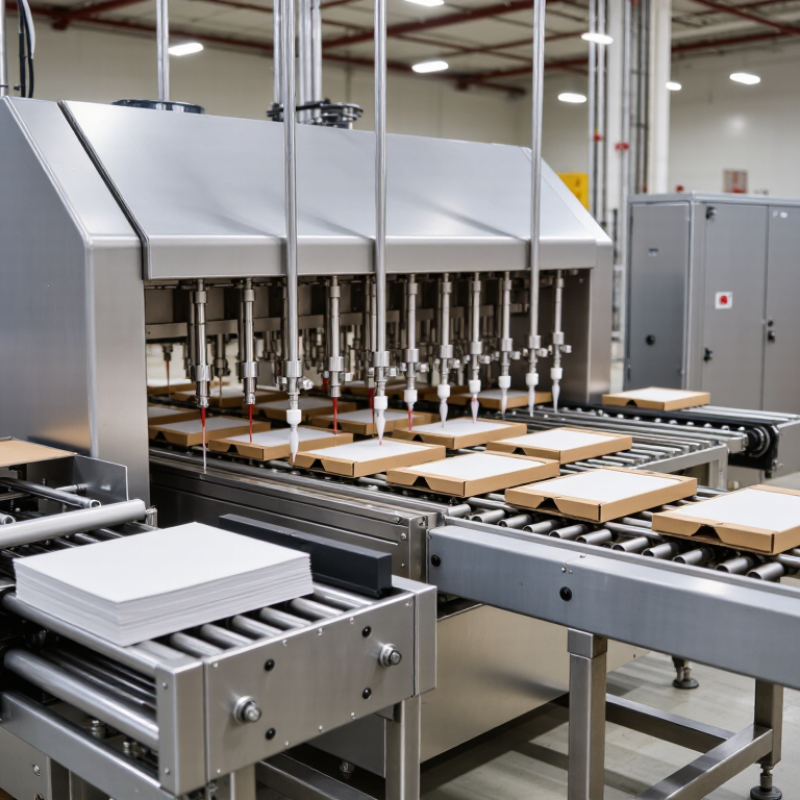
What Is an Automatic Feeding Gluing Machine?
An automatic feeding gluing machine forms flat carton blanks into finished boxes without manual sheet placement. It feeds, aligns, folds, glues, and delivers cartons in one continuous process. In 150–300 m/min lines, the machine must maintain timing within fractions of a second. One skewed blank can disturb the entire stream. That distinction matters.
According to FEFCO’s 2023 industry statistics, European corrugated plants produced roughly 48 billion square metres of board. Such volume explains the demand for stable automation. At 150 m/min, a line can theoretically move 9,000 metres of material each hour. At 300 m/min, that figure doubles. Speed is not output. Actual production depends on carton size, board quality, glue setting, changeover time, and rejected pieces.
A reliable system uses servo-driven feeders, vacuum belts, photoelectric sensors, and adjustable compression sections. These components help control overlap, folding accuracy, and adhesive placement. Industry reports from Smithers also place the global corrugated packaging market above US$200 billion during the current forecast period, increasing pressure on converters to improve throughput without sacrificing quality. Yet a high-speed specification can mislead. Small cartons may run quickly, while large or complex designs require slower settings. In practical testing, operators should record usable cartons per hour, not only the advertised line speed. That measurement is less impressive, but more honest.
This chart shows the theoretical product flow of an automatic feeding and gluing line operating at 150–300 m/min. Values are calculated as line speed divided by product pitch: pieces per minute = line speed ÷ pitch. Actual output may be lower because of setup time, material handling, folding complexity, and stoppages.
What Is an Automatic Feeding Gluing Machine?
An automatic feeding gluing machine converts flat sheets into accurately folded, adhesive-sealed products. Its feeder separates blanks from a stacked pile and moves them through the line with controlled suction or friction. Consistent feeding matters. A double sheet can disrupt every downstream station.
The registration unit aligns each blank against side and front guides. This keeps print, crease lines, and cut edges in the correct position. Small alignment errors become obvious after folding. The adhesive unit then applies a measured glue line through nozzles, wheels, or contact systems. Operators must match glue volume with material absorbency and machine speed. Too much adhesive causes squeeze-out. Too little creates weak seams.
The folding section uses belts, rails, and folding plates to form the scored panels. Pressure should remain stable, especially with coated or lightweight stock. The delivery unit compresses and collects finished pieces into an orderly stack. It also gives operators a useful quality check. Misfolded blanks, open seams, or uneven piles can appear immediately. In real production, setup is rarely perfect on the first attempt. Dust, warped sheets, and changing humidity can alter performance. Regular cleaning and careful test runs remain essential, even on highly automated equipment.
| Core Component | Primary Function | Main Operating Elements | Typical Materials or Parameters | Quality-Control Points | Common Performance Indicators |
|---|---|---|---|---|---|
| Feeder | Separates and continuously transfers flat blanks or sheets into the production line. | Pickup belts, suction or friction rollers, pile table, side guides, and sheet-separation controls. | Paperboard, corrugated board, folding carton blanks, and laminated sheets; commonly handles boards from approximately 200 to 800 g/m², depending on machine design. | Consistent sheet separation, stable pile alignment, low double-sheet frequency, and reliable feeding of warped or porous stock. | Feeding speed: commonly about 100–300 m/min or expressed as blanks per minute; actual output depends on blank size and folding pattern. |
| Registration | Aligns each blank laterally and longitudinally before adhesive application and folding. | Side lays, front stops, timing rollers, registration belts, sensors, and adjustable guide rails. | Mechanical or servo-assisted positioning; registration settings are adjusted according to blank dimensions and board thickness. | Correct panel position, stable centerline, accurate leading-edge control, and minimal skew during transfer. | Typical registration objective: approximately ±1 mm under suitable material, setup, and operating conditions. |
| Adhesive Unit | Applies a controlled adhesive pattern to the designated glue flaps or bonding areas. | Glue reservoir, pump or metering roller, glue wheel or nozzle, scraper, filters, and adhesive-level controls. | Water-based cold glue is widely used; hot-melt systems may be selected for specialized substrates or bonding requirements. | Glue-line continuity, correct glue position, suitable adhesive viscosity, clean application parts, and sufficient open time. | Application control: commonly adjusted by roller speed, nozzle timing, glue viscosity, and deposit width; excessive glue can cause squeeze-out and slow drying. |
| Folding | Scores, bends, and folds the blank into the intended carton, sleeve, envelope, or linear box shape. | Pre-break rollers, folding belts, folding rails, ploughs, compression rollers, and format-change guides. | Suitable for straight-line, crash-lock, sleeve, and selected multi-point folding layouts, subject to machine configuration. | Accurate crease tracking, square folds, consistent panel overlap, smooth transfer, and no cracking on printed or laminated surfaces. | Typical output range: approximately 80–250 m/min for many carton applications, with speed limited by blank geometry and glue curing time. |
| Delivery | Receives, compresses, counts, and stacks finished glued products for inspection, packing, or downstream processing. | Delivery belts, compression section, joggers, counter, batch separator, and stacker table. | Adjustable compression pressure and delivery height; settings depend on product size, board stiffness, adhesive type, and stacking format. | Bond strength after compression, stack alignment, accurate counting, stable batch separation, and prevention of product scuffing. | Output consistency: depends on adhesive setting time, compression duration, product geometry, and the machine’s rated line speed. |
| Control and Safety System | Coordinates timing, speed, fault detection, setup parameters, and operator protection across all machine sections. | PLC or motion controller, touchscreen interface, photoelectric sensors, emergency stops, guards, and overload protection. | Recipe storage may include feeder timing, registration position, glue timing, folding guides, belt speed, and delivery settings. | Sensor response, alarm accuracy, guarded access, emergency-stop function, repeatable setup, and safe restart procedures. | Operational benefit: faster changeovers, reduced setup waste, improved repeatability, and easier monitoring of jams or missing blanks. |
| Integrated Process Result | Converts flat printed or die-cut blanks into accurately glued and folded finished products in a continuous process. | Coordinated feeding, registration, adhesive application, folding, compression, counting, and delivery. | Performance varies with blank size, board grade, crease quality, adhesive formulation, folding complexity, and operator settings. | Finished dimensions, bond integrity, fold accuracy, surface appearance, stack quality, waste rate, and production uptime. | Best-use condition: standardized blanks, consistent board quality, correctly prepared adhesive, clean glue components, and routine preventive maintenance. |
What Is an Automatic Feeding Gluing Machine?
Step-by-Step Operation: Feeding, Aligning, Gluing, Folding, and Compression
An automatic feeding gluing machine processes flat cartons or paperboard blanks with limited manual handling. The feeder separates stacked blanks using belts, rollers, or vacuum suction. Each blank enters the line at a controlled speed. Moisture, dust, and warped sheets can disturb feeding, so operators inspect the stack before production begins.
Alignment keeps every blank in the correct position. Side guides and registration rollers correct small deviations before adhesive application. A glue wheel or nozzle then places adhesive along the specified flap. Too much glue may cause overflow, while too little can weaken the joint. Operators should check adhesive temperature, viscosity, and coverage during the run.
Folding rails gradually bend the blank along its crease lines. This movement must match the material’s stiffness and scoring quality. The folded carton enters a compression section, where belts or rollers apply steady pressure while the adhesive sets. A practical inspection includes checking flap position, bond strength, squareness, and surface cleanliness. In practice, the process is rarely flawless. A slight guide shift can create repeated crooked cartons. When this happens, stopping early may prevent larger waste, although production pressure often encourages quick adjustments. Technicians should record the cause, not only correct the visible defect.
What Is an Automatic Feeding Gluing Machine?
An automatic feeding gluing machine separates flat cartons, feeds them forward, applies adhesive, and folds the panels into shape. Its value is not speed alone. Operators should examine four linked metrics: output speed, ±1 mm accuracy, glue consumption, and OEE. A fast machine can still create waste when feeding shifts or adhesive spreads unevenly.
Speed should be measured with real cartons, not an empty conveyor. Record stable pieces per minute, changeover time, and stoppages. The ±1 mm target matters at the glue flap and fold line. A small deviation can cause open seams, crushed corners, or poor stacking. Glue use is best tracked in grams per carton. Excess adhesive raises cost and may slow curing. Too little glue risks failed seals. This balance needs testing with carton thickness, temperature, and adhesive viscosity. Conditions change.
Tips: Check ten consecutive cartons after setup. Measure flap position with a ruler or digital gauge. Inspect glue width under strong light. Keep a simple log for speed, rejects, and adhesive weight.
OEE combines availability, performance, and quality. A machine running at rated speed may show weak OEE if minor stops happen every few minutes. In practice, these pauses are easy to overlook. I would review shift data, not one impressive trial. Operators should also record cleaning time and manual adjustments. Those details expose the gap between technical capability and daily production.
Selection should begin with the board range, not the machine’s advertised speed. Measure minimum and maximum sheet length, width, thickness, flute profile, and warp. A narrow feeding window can create jams when humidity changes. Smithers’ corrugated packaging market analysis identifies e-commerce and lightweighting as continuing demand drivers. Therefore, stable feeding matters as much as peak output.
Adhesive choice also requires testing. Water-based glue suits many paperboard applications, while hot-melt systems can support faster setting. However, viscosity, open time, nozzle temperature, and coating weight must match the board. Ask for trials using your actual stock. Clean edges matter.
Safety controls should include guarding, emergency stops, interlocks, heat protection, and safe access for cleaning. ISO 9001:2015 supports documented calibration, inspection records, corrective actions, and traceable production checks. The ISO Survey 2022 recorded 1,265,216 ISO 9001 certificates across 189 countries and economies.
That figure shows the standard’s broad industrial acceptance, but certification alone cannot prove machine performance. A practical audit should review glue consumption, folding accuracy, downtime, and reject rates. One specification may still be incomplete. Production reality is less tidy.
| Cookie | Duration | Description |
|---|---|---|
| cookielawinfo-checkbox-analytics | 11 months | This cookie is set by GDPR Cookie Consent plugin. The cookie is used to store the user consent for the cookies in the category "Analytics". |
| cookielawinfo-checkbox-functional | 11 months | The cookie is set by GDPR cookie consent to record the user consent for the cookies in the category "Functional". |
| cookielawinfo-checkbox-necessary | 11 months | This cookie is set by GDPR Cookie Consent plugin. The cookies is used to store the user consent for the cookies in the category "Necessary". |
| cookielawinfo-checkbox-others | 11 months | This cookie is set by GDPR Cookie Consent plugin. The cookie is used to store the user consent for the cookies in the category "Other. |
| cookielawinfo-checkbox-performance | 11 months | This cookie is set by GDPR Cookie Consent plugin. The cookie is used to store the user consent for the cookies in the category "Performance". |
| viewed_cookie_policy | 11 months | The cookie is set by the GDPR Cookie Consent plugin and is used to store whether or not user has consented to the use of cookies. It does not store any personal data. |