What Is ABC Cable and Which Type Is Best for Global Buyers?
When global buyers search for Abc Cable, they may be comparing products with different structures, voltages, and market names. In many electrical markets, ABC means Aerial Bundled Cable, designed for overhead power distribution. Its insulated conductors are bundled around a supporting messenger or arranged in a compact configuration. This design can reduce corridor space and improve protection against accidental contact. However, “ABC Cable” is not a complete specification. Buyers must confirm conductor material, insulation type, rated voltage, cross-sectional area, messenger design, and applicable standards.
Details matter.
A practical purchasing review should begin with the project environment. A coastal installation may require stronger resistance to salt, moisture, and ultraviolet exposure. A cold region may need insulation that remains flexible during winter handling. For long spans, mechanical strength and sag performance deserve careful attention. I have seen attractive product sheets hide important gaps, especially around testing evidence and delivery conditions. That is worth questioning. Reliable suppliers should provide traceable material information, routine test reports, dimensional data, and clear certification references. Depending on the destination, buyers may also need compliance with IEC, BS, EN, or other recognized requirements. Standards should never be assumed from a product name alone.
The best Abc Cable is therefore not simply the cheapest option or the thickest conductor. It is the cable that matches the network design, local climate, installation method, and inspection expectations. A careful comparison can prevent costly replacement work later. Yet specifications can still be misunderstood. Independent engineering review remains sensible for complex or high-value projects.
What Is ABC Cable and How Does Its Design Work?
What Is ABC Cable and Which Type Is Best for Global Buyers?
What Is ABC Cable and How Does Its Design Work?
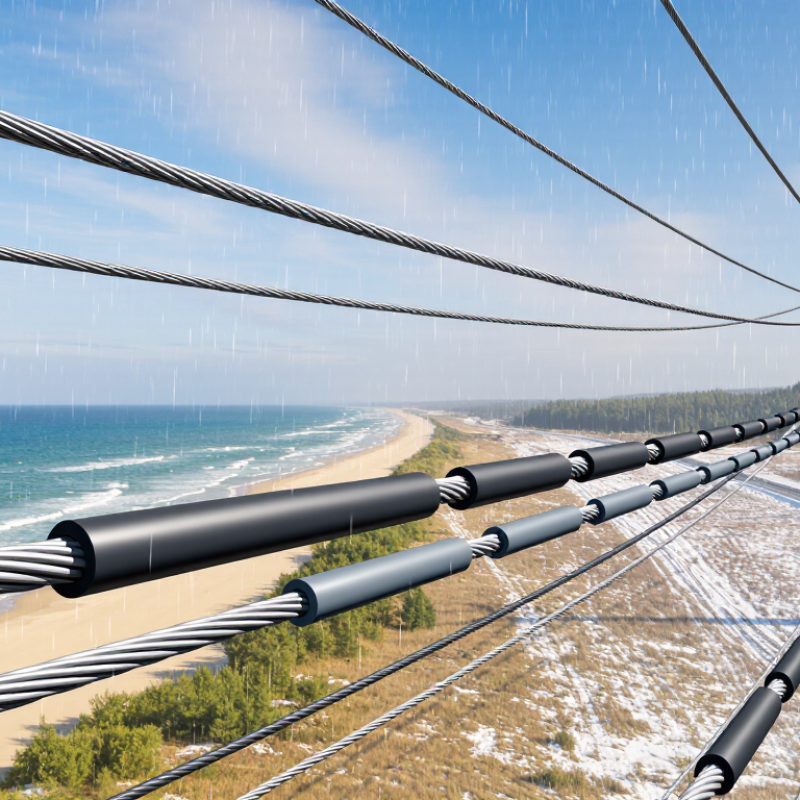
Aerial bundled cable, or ABC cable, combines insulated conductors into one compact overhead assembly. The conductors usually wrap around a central messenger wire. This messenger supports mechanical load and may also serve as the neutral conductor. The design removes many crossarms, reduces phase spacing, and limits accidental contact with nearby branches.
That structure matters in crowded streets. A bundled line can pass beside buildings with less corridor width. Insulated conductors also reduce short circuits caused by wind-driven movement. However, insulation does not make installation careless. Cable tension, messenger strength, ultraviolet resistance, and connector quality still require careful checking. A small mismatch can create heat at a joint.
The International Energy Agency reported in Electricity Grids and Secure Energy Transitions that annual global grid investment must rise from about 300 billion dollars to 600 billion dollars by 2030. This pressure increases demand for compact distribution designs. Low-voltage ABC is often practical for dense residential networks. Medium-voltage ABC may suit longer feeders, but its screening, stress control, and termination requirements are more demanding.
IEC 60502-1 is commonly referenced for low-voltage power cable construction, while local rules govern installation details. Buyers should compare conductor material, insulation compound, rated voltage, temperature range, and accessory compatibility. Price alone misleads. A lighter cable may reduce transport costs, yet insufficient tensile strength can create expensive repairs. The design is efficient, but not foolproof.
What Is ABC Cable and Which Type Is Best for Global Buyers?
Common Conductor Sizes in Low-Voltage Aerial Bundled Cable
Aerial Bundled Cable (ABC) combines insulated phase conductors, and often a neutral or messenger conductor, into one compact overhead power cable. Low-voltage ABC systems are commonly designed for rated voltages up to 0.6/1 kV. The chart shows standardized nominal conductor cross-sectional areas commonly specified for distribution applications.
Larger conductor cross-sectional areas generally support higher current-carrying capacity and longer installation spans, but the correct selection also depends on load demand, voltage drop, ambient temperature, installation conditions, mechanical requirements, and applicable local standards.
What Are the Main Types of ABC Cable?
ABC cable means Aerial Bundled Cable. Its insulated conductors are twisted around a supporting core or messenger. This design reduces corridor width and accidental contact risks. It suits dense streets, rural feeders, and difficult overhead routes.
The main type is low-voltage ABC cable, commonly rated up to 1 kV. Utilities use it for residential distribution and service connections. Medium-voltage ABC cable serves feeders, often from 6 kV to 36 kV, depending on the standard. Buyers also compare duplex, triplex, and quadruplex designs. These names describe conductor quantity, not voltage. Aluminum conductors reduce weight and cost, while compacted strands improve installation handling. IEC 60502-1 and IEC 60502-2 provide useful reference points, but national requirements can differ. The IEA’s 2023 Electricity Grids report estimates that 80 million kilometres of grids must be added or refurbished worldwide by 2040. That pressure may increase demand for compact overhead solutions, although cable selection remains site-specific.
Tips: Confirm voltage, messenger strength, insulation material, short-circuit rating, and operating temperature. Request routine-test data and third-party certification. A cheaper cable may fail the real installation test. I have seen specifications look complete, yet omit neutral sizing or span conditions. That is an easy detail to miss. Check wind, ice, ultraviolet exposure, and maximum sag before comparing prices. Use the applicable IEC or national standard, not only a supplier’s catalogue description.
How Do ABC Cables Differ in Materials and Performance?
ABC cable, or aerial bundled cable, combines insulated conductors into one overhead assembly. Its materials strongly shape safety, service life, and installation cost. Most designs use compact stranded aluminum conductors because aluminum is light and conductive enough for distribution networks. Copper can carry current efficiently, but its weight and price often limit overhead use. That choice is not universal. Local loading matters.
Insulation usually comes from cross-linked polyethylene (XLPE) or polyethylene (PE). XLPE tolerates higher operating temperatures and handles short overloads better. PE can suit simpler networks, but its thermal margin may be lower. UV resistance, moisture sealing, and abrasion strength deserve equal attention. A cable facing tropical sunlight needs different protection from one exposed to freezing wind. During specification reviews, engineers should check conductor size, allowable current, voltage rating, insulation thickness, and messenger strength against local standards. Marketing tables sometimes simplify these limits.
Performance also depends on installation, not material alone. Tight bends, poor stripping, or undersized fittings can damage insulation and raise fault risks. A durable ABC cable should maintain stable current capacity, low sag, and reliable insulation after years of heat cycles. Fire behavior may also influence selection near buildings. I would not choose the thickest insulation automatically; it may increase weight and handling difficulty. Test reports, batch traceability, and independent inspection provide stronger evidence than a polished catalogue. Some project assumptions will be wrong. Recheck them before purchase.